
Even if the voltage waveform is distorted (non-sinusoidal), it provides a smoothing function
that restores it toward a sinusoidal waveform.
Through its series-reactor function, it adjusts voltage and reduces motor starting current,
while also limiting transient overcurrent.
It can remove noise from incoming waveforms—based on the same principle as a toroidal-core
coil used at a power supply input stage. In addition, because our system is neither phase-control
nor switching-based, it generates virtually no noise itself.
Installed at mixed-load sites such as convenience stores and gas stations, our system has achieved 10–25% energy savings. Compared to the expected efficiency gains of high-efficiency motors under the national G7 Project, which are typically up to about 5%, it delivers significantly greater power-saving results.
| Category | Rated(220V) | Low(209V) | High(242V) |
|---|---|---|---|
| Lifespan | 100% | 195.8% | 28.7% |

207V(-6%) - 233V(+6%), 220±13V
342V(-10%) - 418V(+10%), 380±38V
Lifespan calculation : (Vo/V)"=195.8%('=13.1)
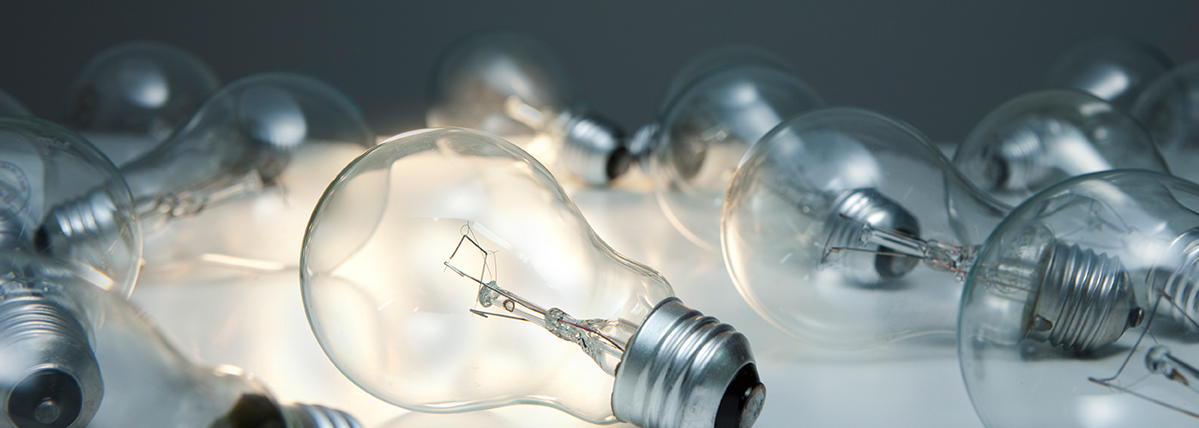
When voltage increases by 1%, current increases by 0.6%, raising filament temperature
and causing the bulb to fail sooner.
The effects of changing the applied voltage on fluorescent lamps are as follows. The service life of an electronic ballast is typically
around five years, but higher operating voltage shortens the lifespan of insulation materials. Overvoltage increases current and
generates heat, which accelerates deterioration of insulation and semiconductor components, leading to a rapid reduction in lifespan.
Replacements also result in large amounts of waste and additional costs.
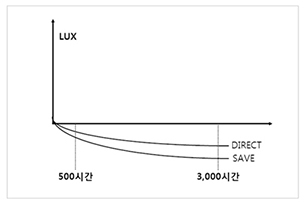

When voltage is supplied in SAVE mode through our device, illuminance may be slightly lower than direct
connection during the first 500 hours. After that, lamp blackening occurs more slowly in the energy-saving
state, allowing luminous flux to be maintained for a longer period. In contrast, with direct connection,
overvoltage accelerates blackening, reducing luminous flux and shortening lifespan. Over the long term,
this helps maintain illuminance and extend fluorescent lamp life. (See the graph on the left.)
Like fluorescent lamps, illuminance and lifespan are affected by voltage, but the operating characteristics are different. In general, after the lamp is turned on, the most stable performance is typically observed at around 207 V. At this level, power consumption decreases, heat loss is reduced, and the power factor improves—helping extend lamp life. In addition, lamps installed at elevated locations (such as canopies) tend to experience a sharp reduction in lifespan due to voltage and ambient temperature, so frequent replacement can involve significant labor, cost, and safety risks.



Reduced electricity costs
through energy savings
Lower lamp purchaseand labor costs by extending replacement intervals
Reduced
maintenance costs